
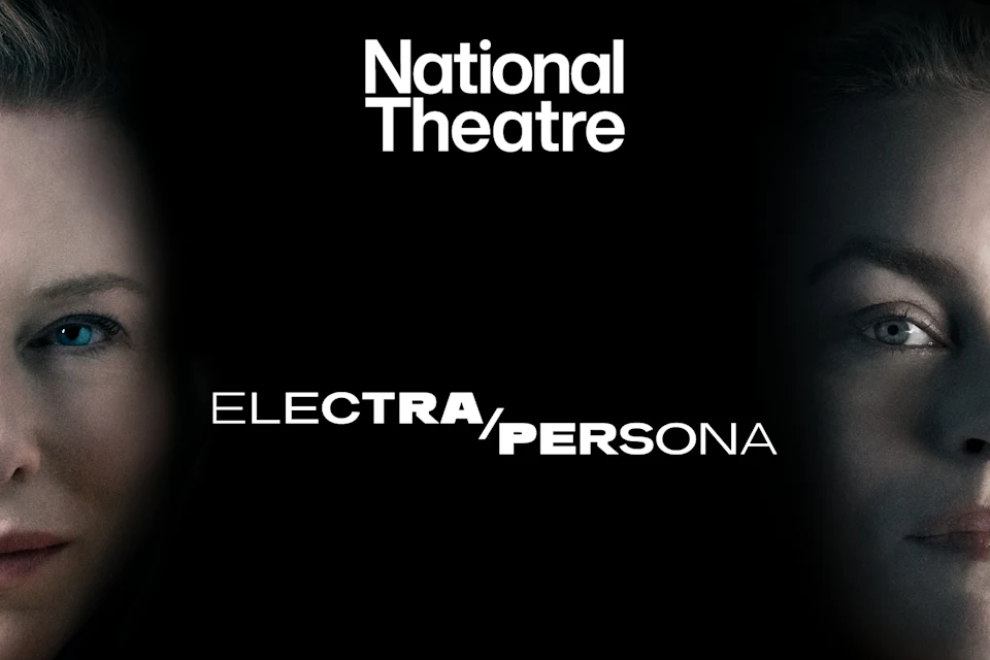
Electra/Persona at the National Theatre – Cate Blanchett stars in this muddled Greek tragedy that left me bored
You can’t move in London’s West End right now without stumbling into a Greek tragedy. Hadestown retelling the story of Orpheus and Eurydice, The Oresteia at the Bridge Theatre, and just last year Brie Larson starring in Elektra at the Duke of York’s. There’s something about Greece the UK is loving – that isn’t Mamma Mia!
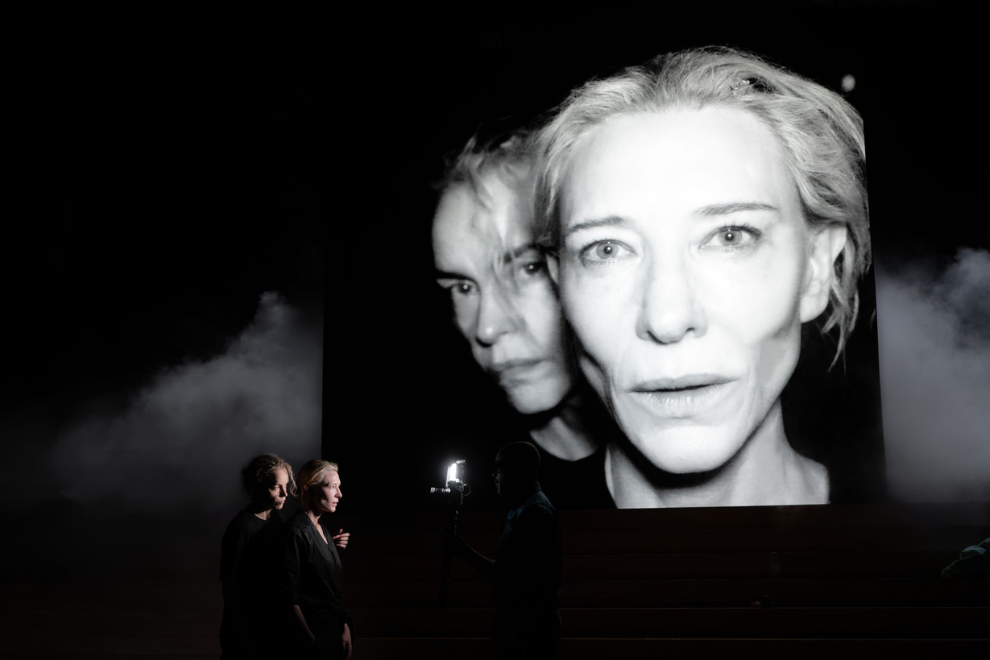
Benedict Andrews’ Electra/Persona merges Sophocles’ Greek tragedy Electra with Ingmar Bergman’s 1966 psychological film Persona, in which an actress suffers a mental breakdown while playing the role of Electra on stage. The concept is intriguing, but in reality, the execution is confused.
The show runs straight through at two hours with no interval (a decision that, interestingly, appears to have been made late into the production process, given that the programme notes still list the running time as two hours and forty minutes including a break). Was it right to remove the interval? Probably. Do these two stories need to be fused together? No.
The First Half: Electra
Sophocles’ Electra is where this production shines. Haunted by her father’s murder by her own mother (after he used one of his daughters as a human sacrifice), Electra is consumed by grief, by the will to survive, and by a need for vengeance that borders on self-destructive. When her long-lost brother Orestes finally returns, she urges him towards a savage and terrifying conclusion and the question of what that costs both of them hangs over every moment.
The Second Half: Persona
The second half transitions into Bergman’s Persona, exploring the psychological aftermath of the actress who broke down playing that very role. It is here that the production itself appears to be having its own breakdown (is that the point?).
The juxtaposition between the performance itself and the breakdown it triggers, should be devastating. But the transition never quite delivers that moment and what follows becomes a slow, drawn-out piece about a silent actress in a mental health facility who has not spoken a word since the incident. It is shown largely through close-up camera work (a cinematic nod to Bergman’s film) that is atmospherically interesting but becomes increasingly laborious.
The cameras, circling and zooming on a performer who cannot speak, would have been far more dynamic as pre-filmed sequences of her inner monologue, the thoughts behind the silence, the voice that no longer comes out. It would have removed the practical awkwardness of the cameras themselves and given the audience something to hold onto during what becomes, eventually, rather a long stretch. By the end I understood why this hadn’t been done but I still think it might have saved the second hour.
The staging is beautiful: old bags of clothing strewn across the stage that become other characters, a dreamlike river made of cloth, a thunder and lightning sequence and smoke effects that conjure something magical but there isn’t enough there to keep your interest for the duration – especially in act two.
The Cast
Oscar-winner Cate Blanchett and German actress Nina Hoss are both wonderful, as is the lesser-advertised Ella Lily Hyland who helps connect the dots between the show. Brief appearances by Patrick Robinson however, felt oddly placed with only a few minutes of stage time during the whole show. Did this character need to be on stage in person?
The production’s quirk is that the two lead actresses alternate the roles of Electra/Elisabet and Clytemnestra/Alma throughout the run, with which actress plays which role decided each night, live on stage, by a coin toss.
The Verdict
The connection between the two works is exciting: Electra deals with extreme, unyielding grief and a woman trapped by her familial role; Persona extends that into a modern psychological portrait of an artist hollowed out by a harrowing performance until the line between self and character completely dissolves. Andrews clearly understands why these two texts belong together but he fails to show this to the audience.
Electra, as a standalone piece, is excellent. Persona loses itself and constantly tries to cling to things that aren’t there. By the end (of what felt like forever), I couldn’t have cared less about these characters and that really isn’t an ideal outcome for a theatre show, which should leave you thinking and questioning but not scratching your head in boredom.
★★
Reviewed by West End Wilma