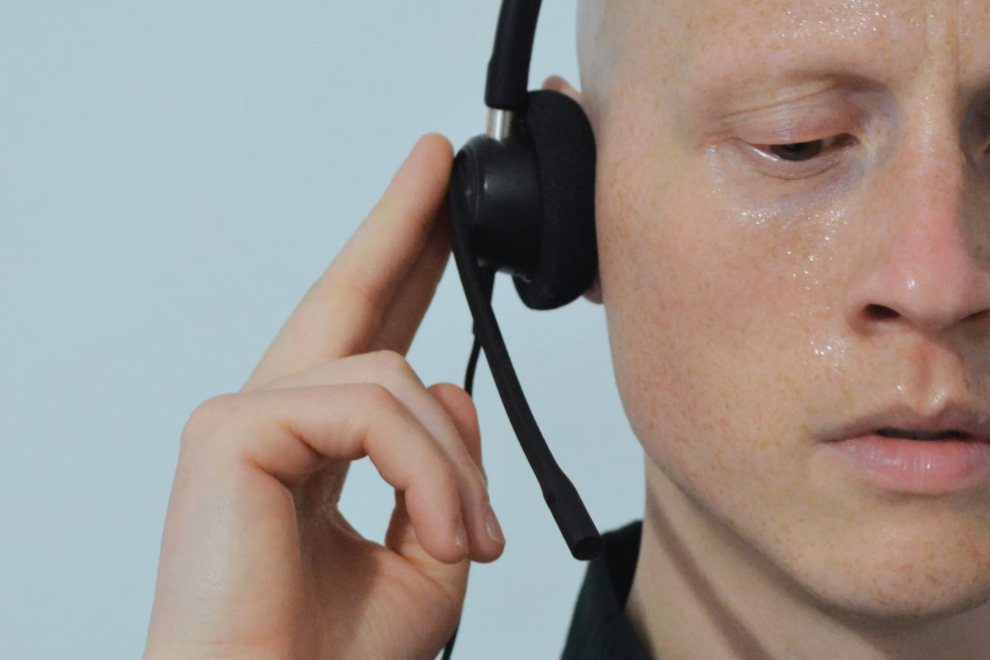
Writer, Producer and Performer Sam MacGregor talks about Hold the Line coming to the Hope Theatre from 21–25 April 2026
Hold the Line is a comedy-drama based on the true events of working in a NHS111 call centre.
After a patient unexpectedly dies during a routine health assessment, Gary’s livelihood and job are brought into disrepute as he faces the heat throughout the shift from hell. What happens when staff are overworked and mistakes are made?
★ ★ ★ ★ ★ ‘gripping and thoughtful production’ – LondonTheatre1
★ ★ ★ ★ ★ ‘touching and powerful piece of theatre’ – The Indiependent
★ ★ ★ ★ ‘while the theme is deadly serious, shards of humour lighten the darkness’ – The Times
★ ★ ★ ★ ‘Sharp, darkly comic episodes and poignant moments combine for a heartfelt drama’ – The List
★ ★ ★ ★ ‘Hold the Line is the type of theatre that speaks to its time’ – Bouquets & Brickbats
★ ★ ★ ★ ‘Thoughtful, well-performed and quietly damning’ – One4Review
‘Hold the Line’ written by Sam Harry Macgregor and nominated for OffFest 2026, debuted at Edinburgh Fringe 2025 with a critically acclaimed sold out run and is now embarking on a UK tour.
Hold the Line is rooted in your own experiences working within NHS 111. At what point did you realise that this high-pressure, largely unseen world had the makings of a stage play?
It took me a good while to realise that this would make a good play, or even a TV show. I had already written, produced and starred in my debut play at the Edinburgh Fringe, so I had that experience in the early stages of working for 111. After maybe two years, I knew there could be a great story here. Over time, I would write little scenes or bits of dialogue and then gradually shape these into an actual storyline.
The show brings humour to situations that were very high stakes. How important was it for you to reflect both the absurdity and the emotional weight of a real shift?
Very important indeed is how I’d describe it. There needed to be a good balance between serious, high-stakes situations, but then sprinkles of humour between all of this. I’d like to think we walk that line really well during our more intense scenes.
Much of the dialogue feels authentic and immediate. How much of the script is drawn directly from real calls, real colleagues and your own time on the frontline?
Most, or nearly all, of the story is taken from either my own experiences or situations that I’ve been within earshot of. If it didn’t happen to me personally, I can honestly say that it happened to a colleague while I was on shift. A fair amount of the dialogue is verbatim too, particularly in terms of 111 jargon. However, for story and dramatic purposes, there are layers of fiction, which I think are important.
You both wrote the play and perform in it. Has stepping into the role on stage changed the way you view your own experiences working within the service?
I get a good release when performing on stage, and the frustrations I get during work are, in a way, released when I get to tell this story night after night. My views have stayed the same, however, in terms of my opinions of NHS 111 and the healthcare service, but I try not to think theatrically or as an actor when I’m at work. I try to just stay present and focus on the patient.
Beyond the drama of the calls themselves, the play also touches on pressure, targets and the human cost of working in overstretched systems. Was it important for you to explore that side of NHS 111 too?
The numbers side is something that pops up a few times throughout the show as a reminder of the pressure faced by all staff, not just characters like Gary. The emotional toll with patients is something we’ve seen before, but obviously if it’s told in a new and effective way then the audience will connect to it. The same applies to the quantitative and statistical side of jobs within the NHS – it’s just another pressure that staff have to face and further communicates the issue of pressure in an already high-pressure job.
What do you hope audiences take away after watching Hold the Line, both in terms of the people who work within NHS 111 and the future of the service itself?
I had a good number of colleagues come and watch our previews before last year’s Edinburgh Fringe and, for some of these people, it was their first time at the theatre. It’s always good when people are introduced to live theatre at any age, so I was glad that it was a show about their actual occupation that got them in.
The arts and the NHS are two severely underfunded services that do so much good for the public, and a play like Hold the Line further proves why things should change. If the right people (the actual shot-callers) came and watched this play, then you never know, there could be a small change. However, proper change comes from way above my role at 111, and I’m doubtful about the NHS improving any time soon, even with a new government.
As long as people connected to the piece and were educated as well as entertained, then I will have achieved what I intended to do when creating Hold the Line.
Hold the Line will be at Hope Theatre from 21–25 April 2026.