

Join the West End Wilma mailing list!
You are now subscribed.

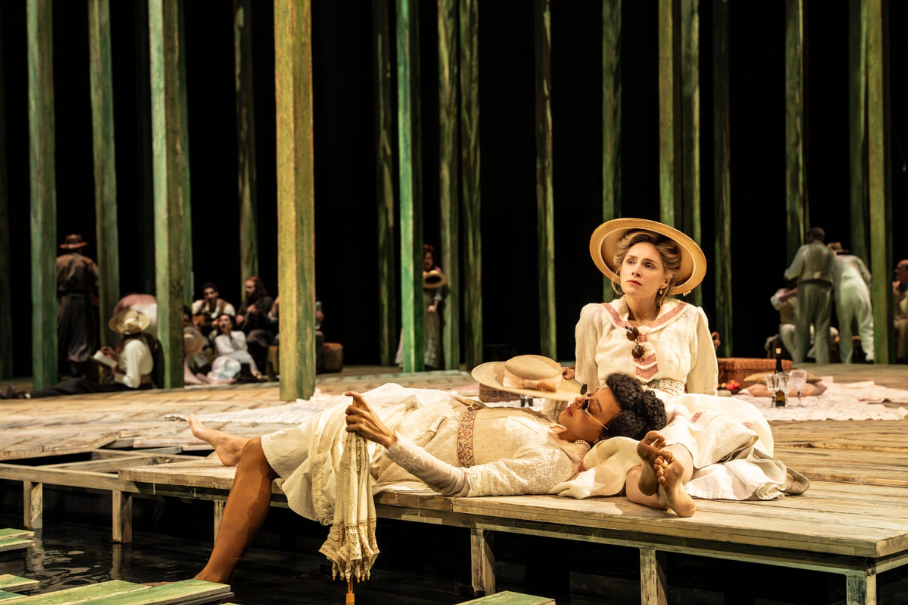
Maxim Gorky’s 1904 play Summerfolk was first staged in 1905 in Russia, offering a biting look at upper-class society and how they occupy their time when work is no longer a necessity.
The play premiered in London in 1974 at the Aldwych Theatre, followed by a 1999 production at the National Theatre.
Now, Summer Folk returns to the National Theatre in 2026, directed by Robert Hastie in a razor-sharp portrait of class, privilege and quiet desperation.
It’s a sweltering summer and the wealthy elite have retreated to their countryside homes to swim, sip champagne and stage their own production of A Midsummer Night’s Dream to pass the time.
But as the days drift by, it becomes clear that money cannot buy happiness. Beneath the surface, these characters are deeply dissatisfied, particularly in their relationships. Marriages strain, new romances falter and a battle of the sexes quietly unfolds, testing loyalties and exposing emotional fractures.
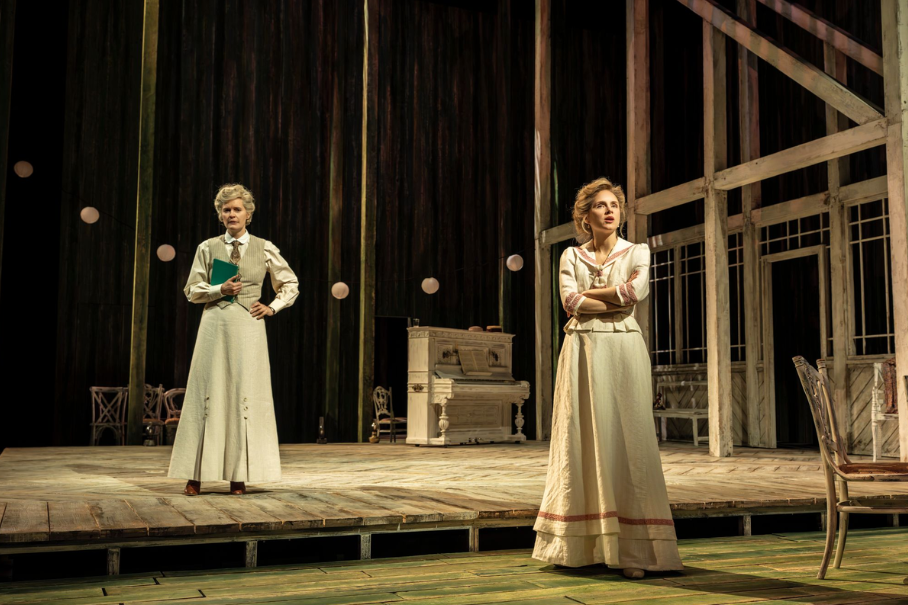
Set in the Bassov summer house, married couple Sergei (Paul Ready) and Vavara (Sophie Rundle) prepare to host their guests, including the celebrated writer Yakov Petrovich Shalimov (Daniel Lapaine), long admired by Vavara.
Among the visitors is Vavara’s brother Vlass (Alex Lawther), a restless dreamer forced into working for Sergei (a role neither man particularly wants him to have). Full of energy and idealism, Vlass is hopelessly in love with the older Maria Lvovna (Justine Mitchell), who cannot comprehend why such a young man would be interested in her.
Maria’s daughter Sonya (Tamika Bennett) embarks on a fleeting summer romance with Maxim Zimm (Thomas Barrett), while elsewhere, tensions simmer in less harmonious relationships.
Bassov’s sister Kaleria (Doon Mackichan), an overly enthusiastic (if not particularly talented) poet, eagerly shares her work with anyone willing to listen.
Meanwhile, the bitter engineer Suslov (Arthur Hughes) is trapped in a loveless marriage with Yulia Filipovna (Adelle Leonce), openly lamenting his situation. His wealthy uncle Semyon Semyonich Dvoyetochiye (Peter Forbes) looms over the household as the man whose fortune will eventually be inherited.
Neighbouring couple Olga Alekseyevna (Gwyneth Keyworth) and Kirill Akimovich Dudakov (Sid Sagar) seek escape from their own domestic lives, finding distraction in the chaos unfolding next door.
Paul Ready delivers a strong performance as the self-entitled, mansplaining Sergei, whose dismissive attitude toward his unhappy wife drives much of the tension. Sophie Rundle brings quiet frustration and emotional depth to Vavara.
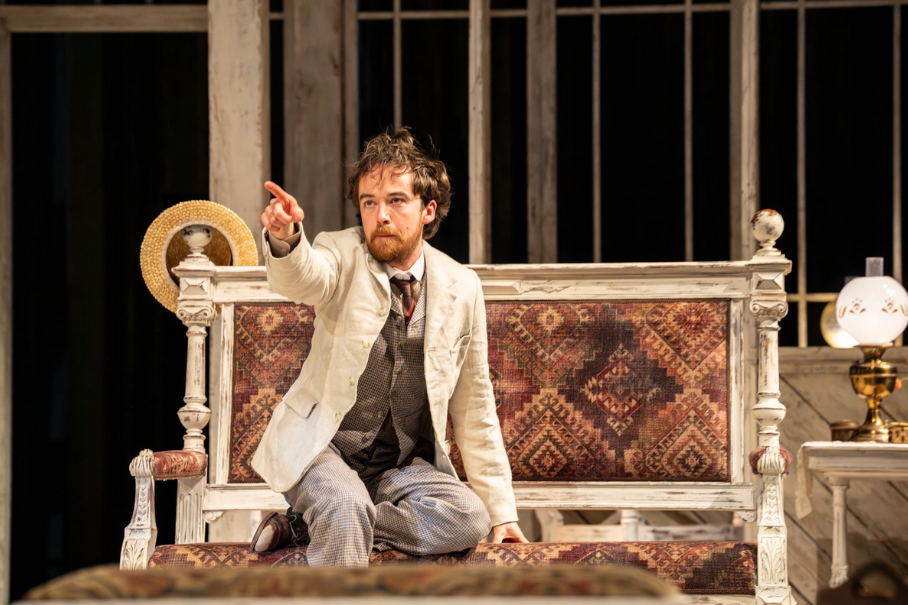
Alex Lawther is a standout as Vlass, appearing as though he has been dragged wildly through the woods – unpredictable, energetic and emotionally raw. He moves through the space with a restless intensity that makes him fascinating to watch.
Opposite him, Justine Mitchell captures Maria Lvovna’s internal conflict beautifully, questioning whether Vlass’s affection is genuine love or something more complex and maternal.
Doon Mackichan brings humour to the role of Kaleria, the overly eager poet, while Gwyneth Keyworth provides welcome moments of light relief as Olga.
With such a large cast, it’s impossible to single out everyone, but this is very much an ensemble piece. On paper, the number of characters and relationships may seem overwhelming, yet the production cleverly weaves them together, making the story surprisingly easy to follow.
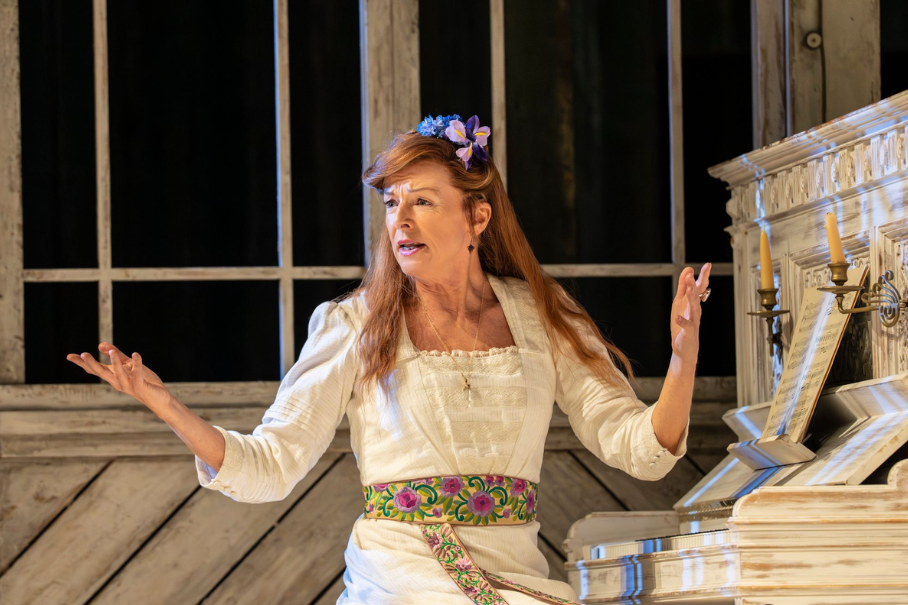
Visually, Summer Folk is stunning. The set and costume design by Peter McKintosh is beautifully realised, with seamless scene transitions and striking use of water that, at one moment, genuinely sent a shiver down my spine.
Director Robert Hastie keeps the action moving at a pace, ensuring that the multiple storylines remain engaging and clear.
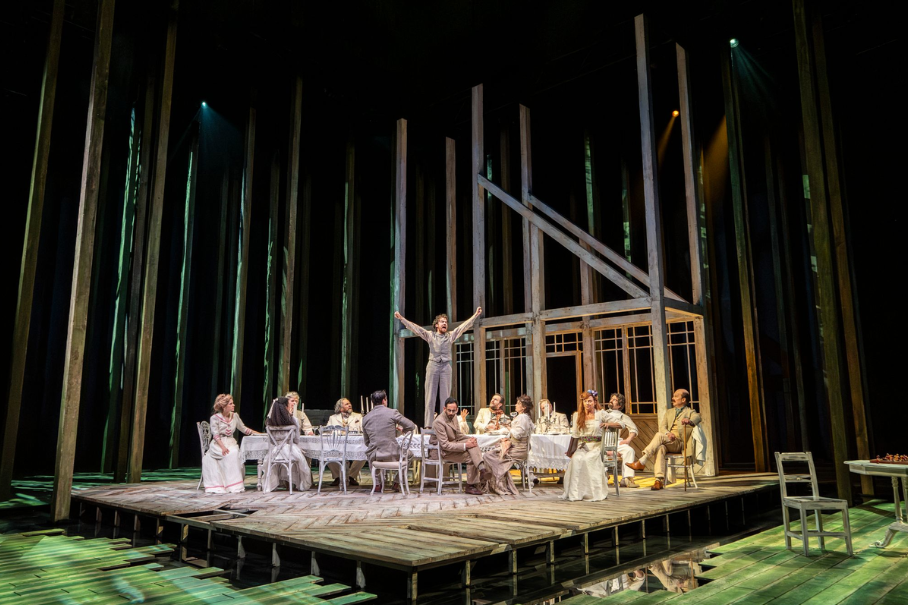
When I heard the play ran for almost three hours, I entered the auditorium already prepared to mark it down. What play really needs that length? Surely things could be cut? But by the end, I couldn’t believe how quickly the time had passed.
The fast pace, combined with the richness of the overlapping storylines, kept me fully engaged from start to finish. What could have felt long instead feels immersive, drawing you completely into this world of privilege, frustration and emotional longing.
Summer Folk proves that when done well, even the longest plays can fly by.
★★★★★
Reviewed by West End Wilma
Summer Folk is playing at the National Theatre until until 29 April 2026.